
If you have ever visited the Chambal River, you will know it is unlike any other river you have ever seen. Its raw beauty, steep ravines, and unique residents make it a river worth knowing. The river is associated with many age-old legends, mysteries, and even a curse. It was also once home to the notorious dacoits of Chambal. It is said that such dark associations and the rugged terrain along its banks kept people away from this river for a long time, which allowed the wildlife to thrive. Times are changing, and so is the river’s fate. Hence, saving this river, the last stronghold of many species on the brink, like the Gharials, Indian skimmers, Ganges river dolphins, and Red-crowned roof turtles, is the need of the day.
Mysterious Past
The Chambal River traces its headwaters to the Vindhya Mountain Range, from where it flows for 960 km to join the Yamuna River. Its journey takes it through the three Indian states of Madhya Pradesh, Rajasthan, and Uttar Pradesh, and a part of it is now protected as the National Chambal Sanctuary. The sanctuary, founded in 1979, covers a 425 km stretch of the river and is managed by the three states.
For a long time, the Chambal River was left alone across a large section of its length. Settlements and industries were slow to grow along its banks, which are sliced by deep gullies and ravines. While the river’s rough geography was a significant deterrent to the growth of civilization, some also attribute the cause to the stories of bloodshed and curses linked to the river. According to local folklore, an ancient king conducted mass sacrifices of animals along its banks, and the blood flowing out would turn the river red.
It is also said that an Indian queen, Draupadi, was publicly humiliated along the banks of this river when she cursed the river for being a mute spectator to her insult. She cursed that anyone who drank the river’s waters would never have their quest for revenge satisfied. Later on, the Chambal’s inhospitable ravines served as the perfect hiding dens of notorious dacoits who looted and killed many unfortunate travellers who happened to pass by. However, while all these happened, the wildlife of the river and ravines thrived with minimal human disturbance.
Gharials Matter
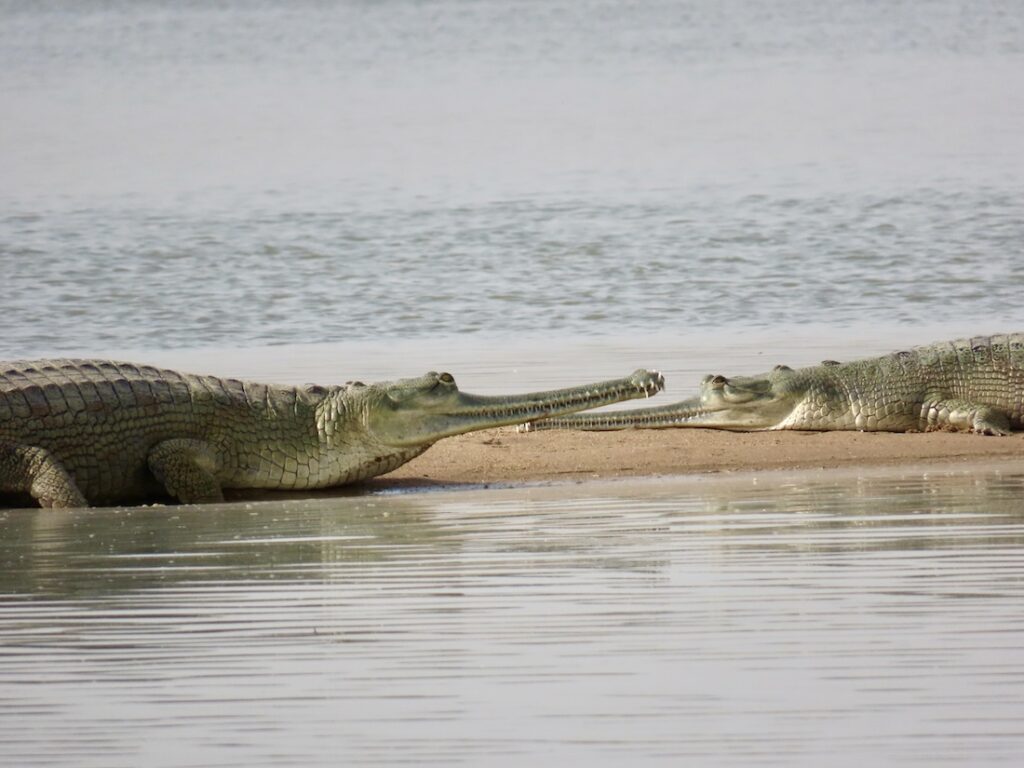
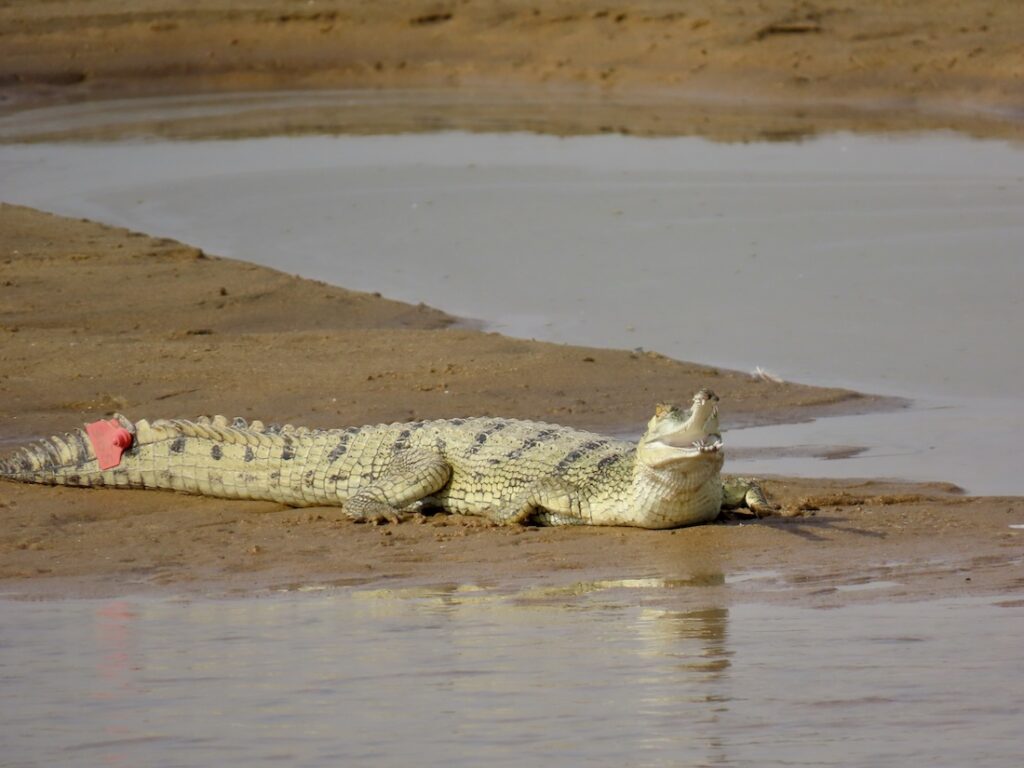
Today, every time you take a boat ride in the National Chambal Sanctuary, expect to be astounded by the abundance of life the river supports. Look out for the sand bars on the river where you will witness Gharials and Mugger crocodiles basking in the sun. The Gharial, a critically endangered species and the world’s most threatened crocodilian, is known to be highly sensitive to its environment. It has disappeared from most major rivers of the subcontinent, where it is endemic, primarily due to high levels of anthropogenic disturbance.
The Chambal remains its last hope, housing over 80% of the global Gharial population. Males of this fish-eating species have a bulbous protrusion near the tip of their snouts, whose “pot-like” appearance gives the species its name, as “ghara” in the local language refers to an earthen pot.
Muggers
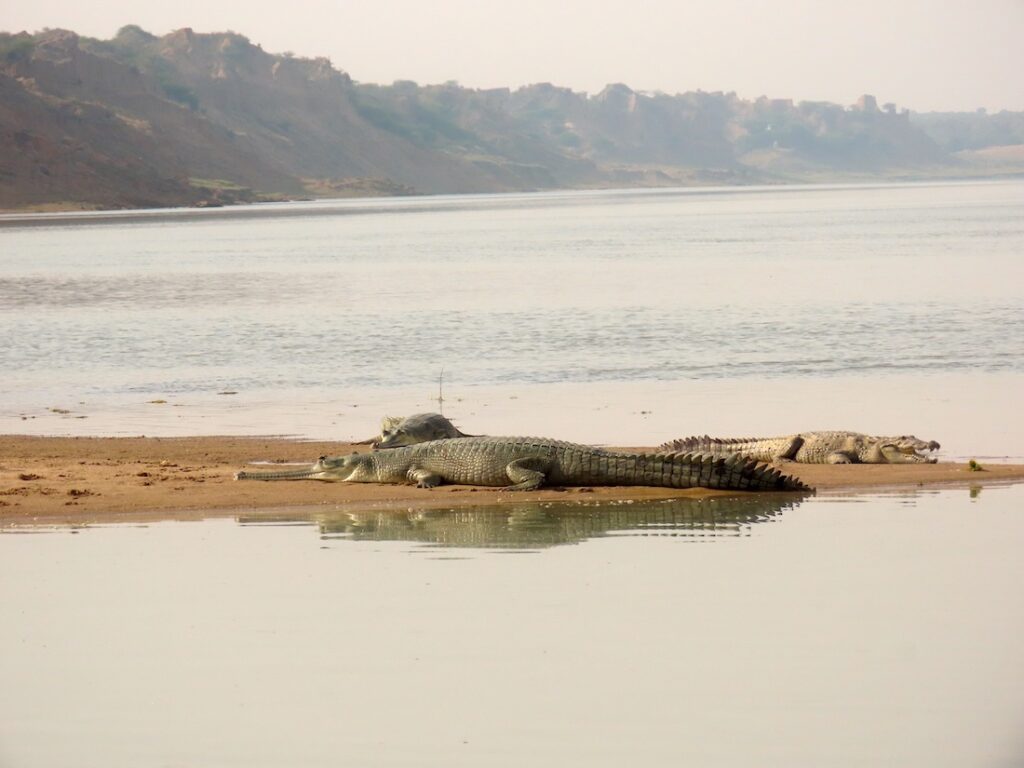
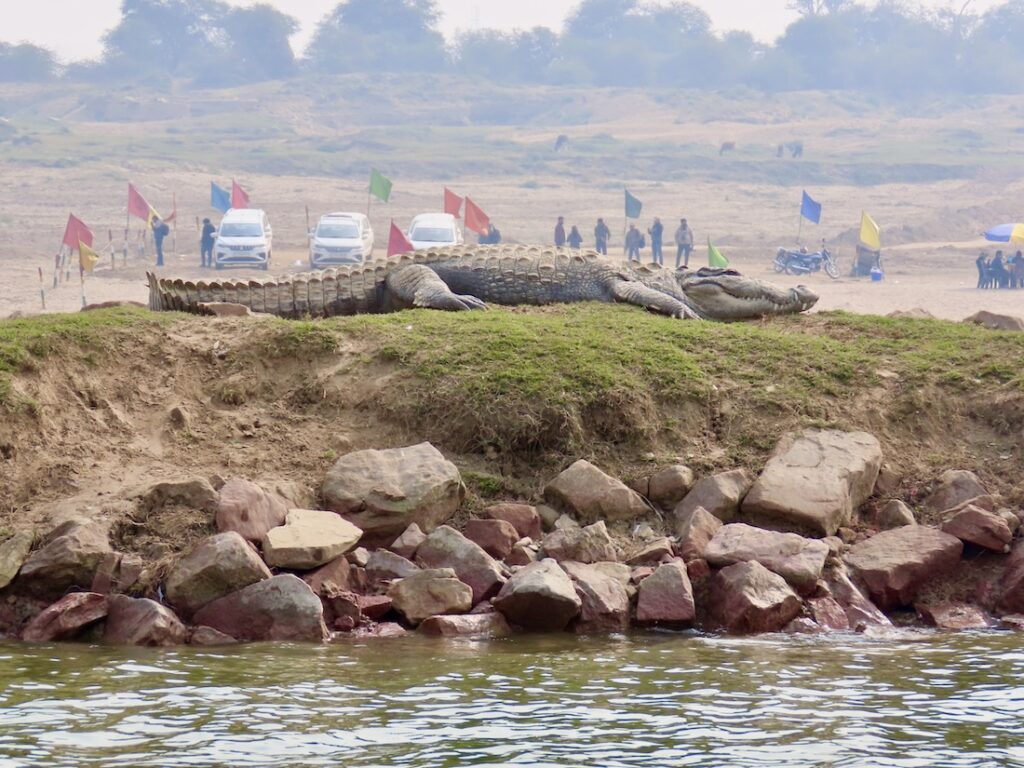
While Gharials are not known to attack humans, the presence of a large number of Muggers adds to the dangerous aura of the Chambal. The Muggers are freshwater crocodiles with a Vulnerable status on the IUCN Red List. They have, however, fared better than the Gharials and have a more widespread distribution. They also have a broader diet base and might occasionally attack an unsuspecting human who accidentally enters the waters near them.
Freshwater Turtles
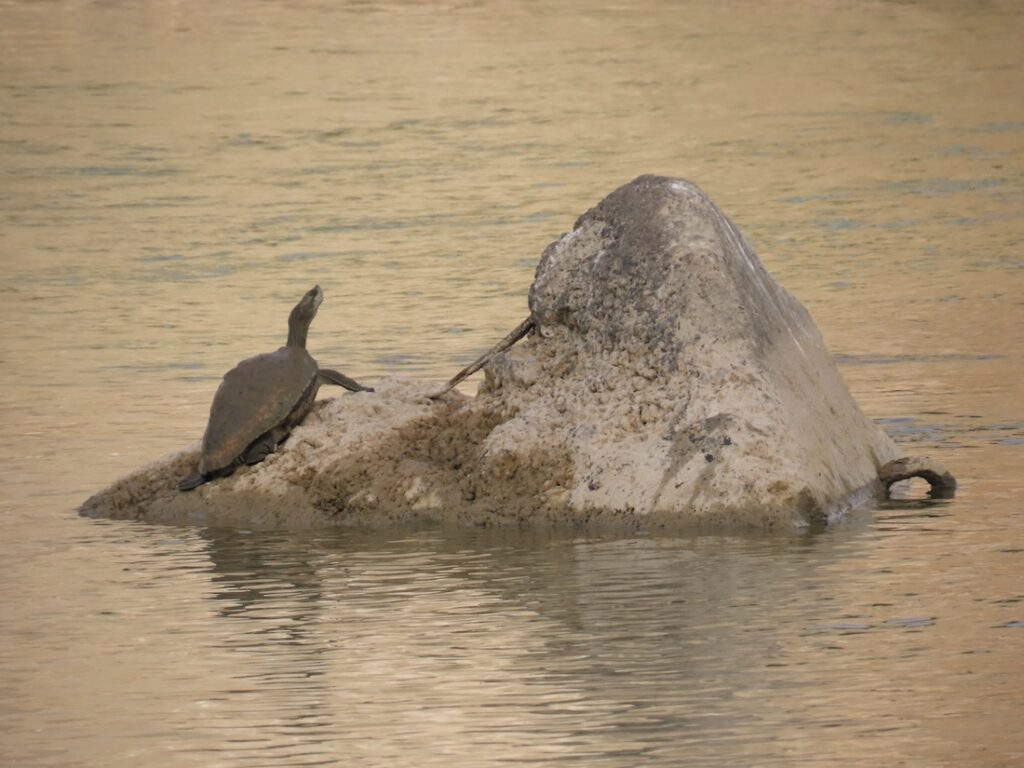
Other less formidable reptilians of the Chambal include eight species of freshwater turtles. If you are fortunate, you might see some of the most threatened among them – the critically endangered Red-crowned roof turtles and three-striped roof turtles enjoying the winter sun above a rocky or sandy perch on the river.
Indian Skimmer
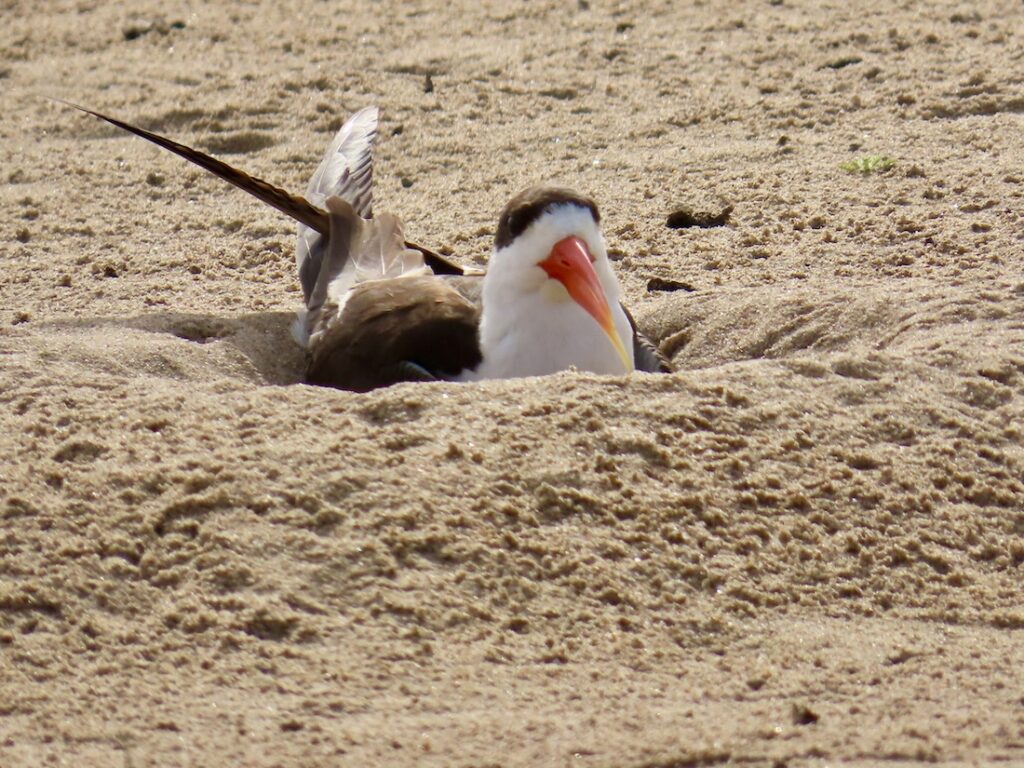
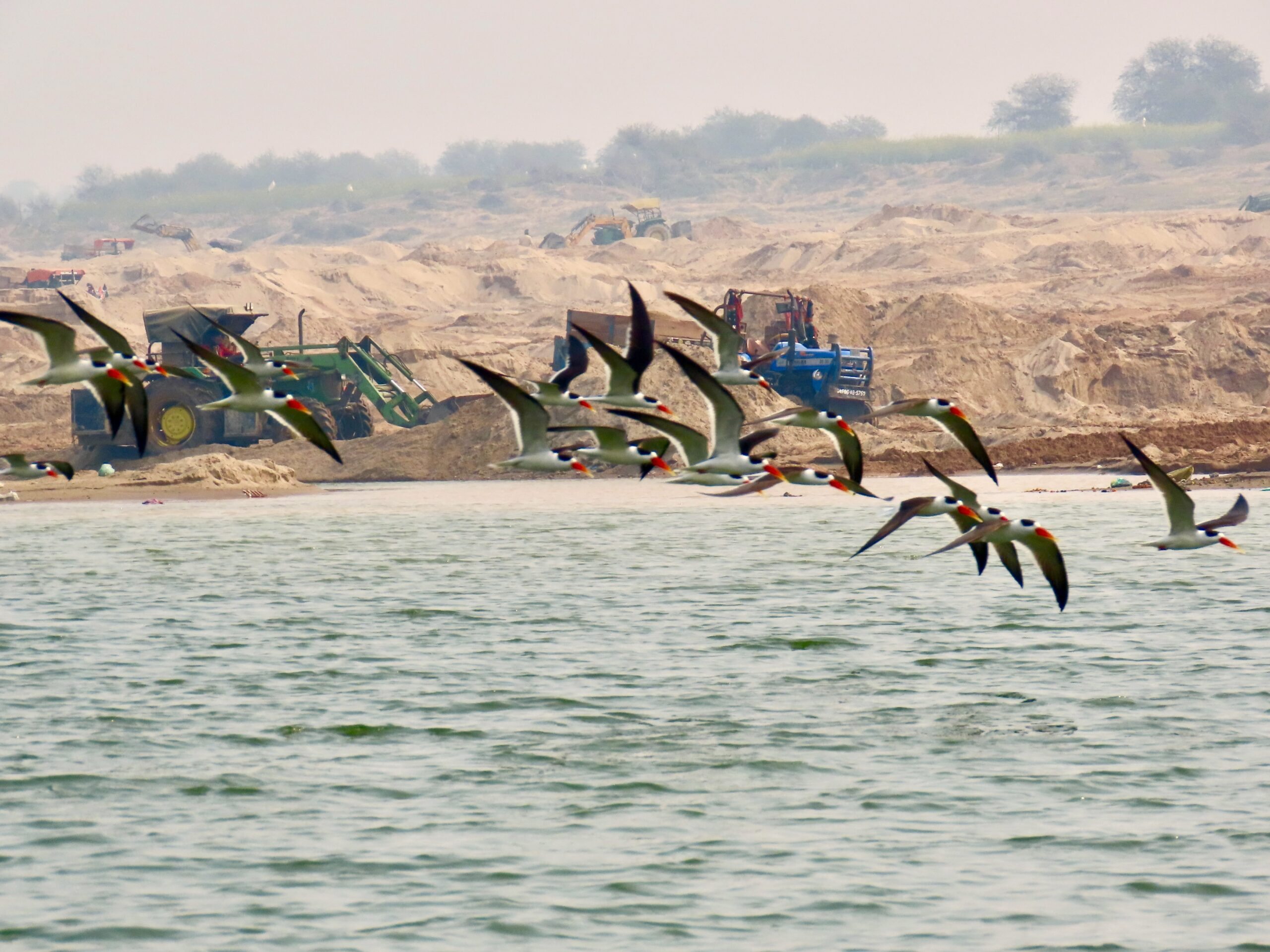
The many Indian skimmers, nesting in their hollowed-out nests on the sandbars of the Chambal, are also a fascinating sight. These black-and-white birds have striking orange bills with yellow tips and orange legs. Their lower beaks are longer, allowing them to skim out fish from the river by flying close to the water’s surface, hence the name.
Like the Gharials, the Chambal also remains one of the last breeding grounds of this endangered bird species. Many other species of resident and migratory birds call the river and its ravines, sandbanks, and scrublands home, including Blackbellied terns, Lesser whistling ducks, Ruddy shelducks, Great thick-knees, Pied kingfishers, and more.
Dolphin
Some rare but thoroughly enjoyable sightings in the Chambal are Ganges river dolphins frolicking in its waters and mischievous Smooth-coated otters going about their busy lives.
Other Wildlife
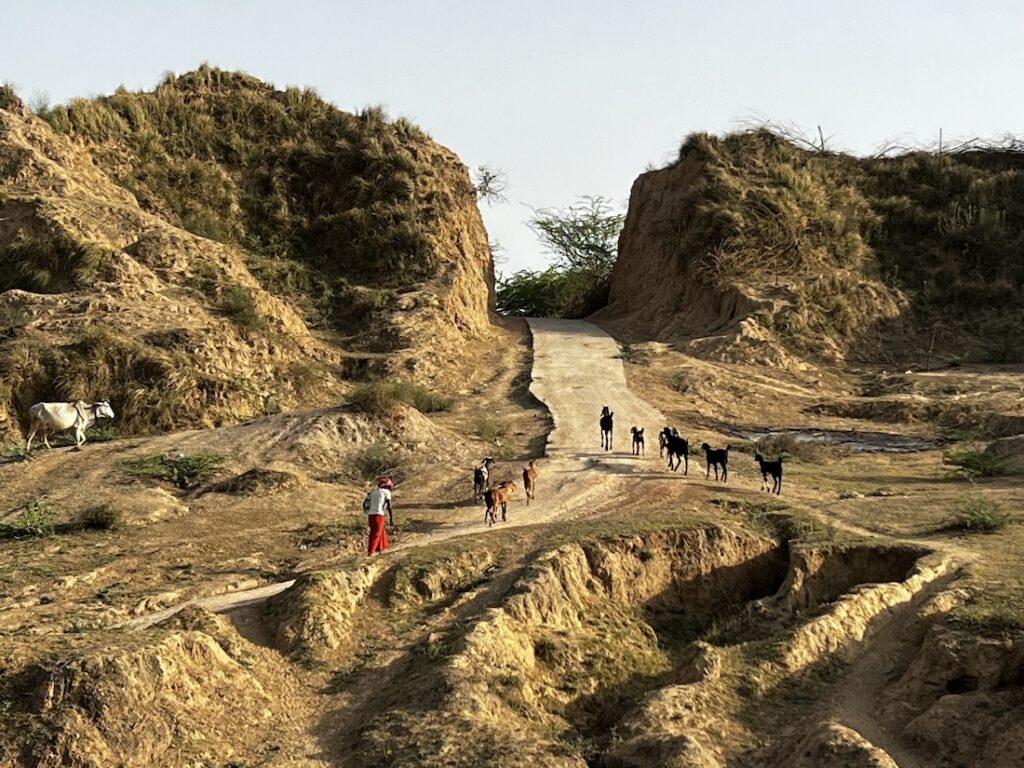
While boating on the river, also look out for Hyenas, Foxes, Jungle cats, Monitor lizards, Jackals, and other species in the treacherous ravines that border the banks of the river. Egyptian vultures, Bonelli’s eagles, and other raptors may be seen on their nests in the upper reaches of these ravines.
Threats
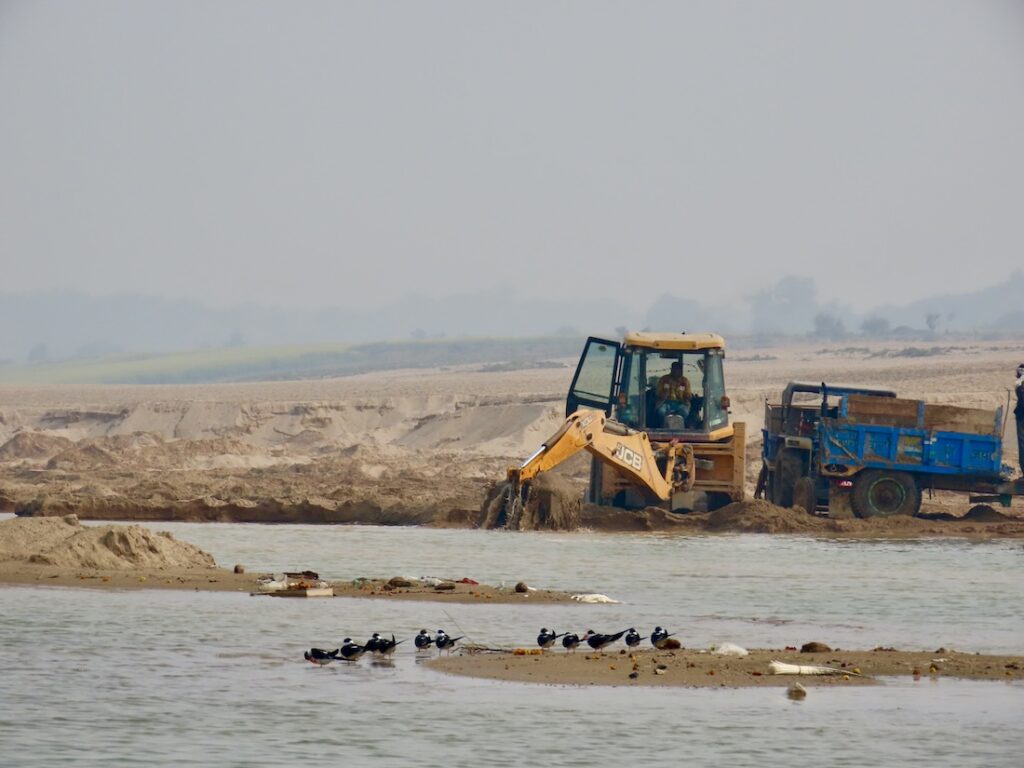
While the Chambal still hosts incredible biodiversity, changing times have taken a toll on one of India’s most pristine riverine ecosystems. One of the major issues linked to the river is sand mining. Illegal sand mining empties the river of its much-valued sand, which is vital for maintaining the river’s ecology and supporting the nesting of many riverine species.
Damming of the river is another significant threat. Several dams already exist on the river, and proposals for future ones have already been drafted. In several incidents in the past, the sudden release of dam water has led to the drowning of nests and hatchlings of Indian skimmers and other species that build their nests on the river’s sandbars.
Rising pollution is another major issue with industries, infrastructure, and human settlements coming up along the river and releasing toxic contaminants into its waters. Of course, climate change will also have an ever-increasing impact on this riverine ecosystem in the coming decades, leading to altered water levels and sand temperatures that are bound to affect the life cycle of the riverine species adversely.
For thousands of years, unique geography and a gory history protected the Chambal and its rich diversity. Today, however, the river needs urgent, stronger legal protection and conservation strategies based on science, traditional knowledge, and community support to save it. Let us ensure that the Chambal, India’s last untamed river, flows wild and free into the future.