
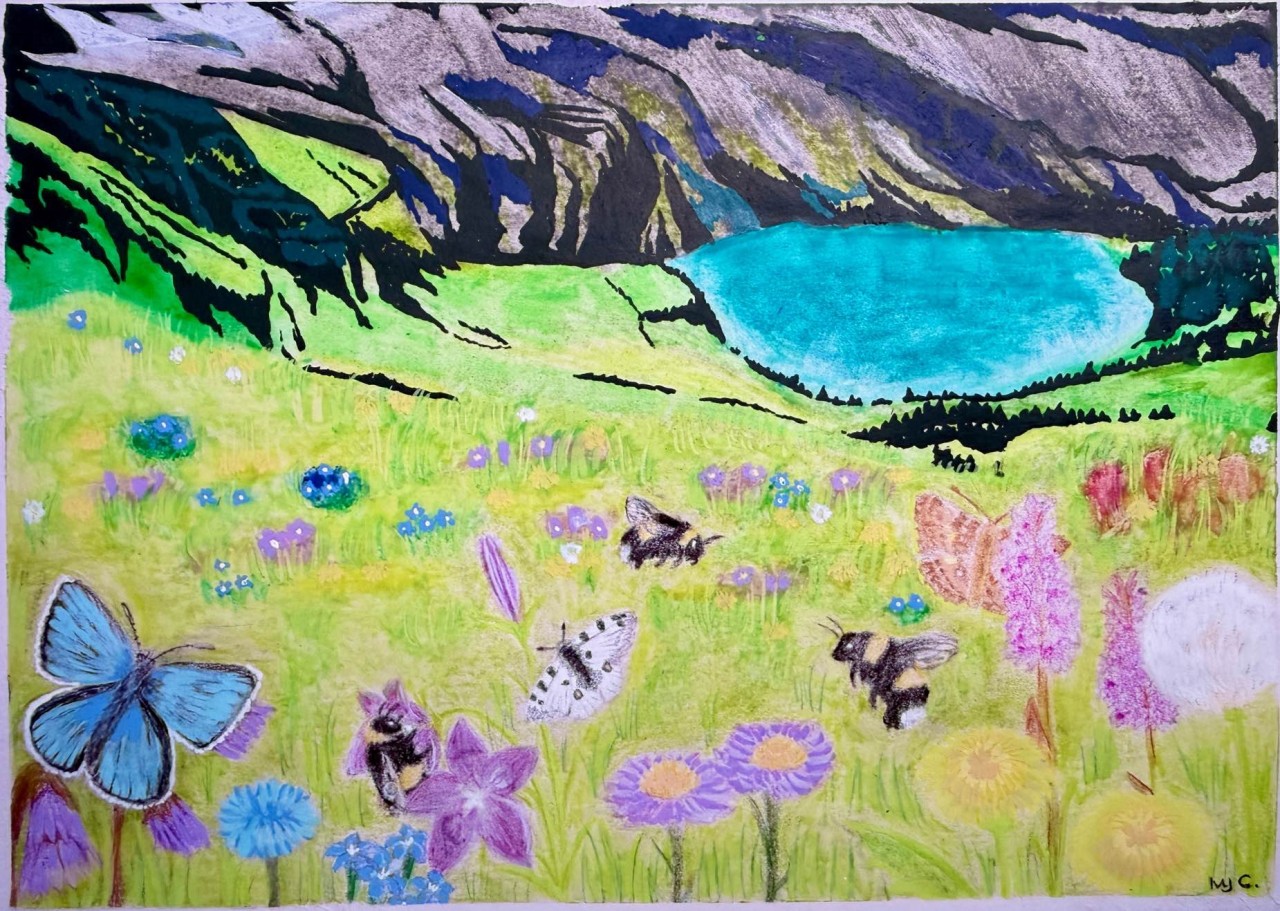
Pollinators are vital to global food and biodiversity. Most insects, including bees, butterflies, flies, wasps, and beetles, are the world’s main pollinators, alongside other pollinators such as birds, bats, and small mammals like monkeys. Approximately 75 percent of all flowering plants and more than a third of global food crops rely on them to reproduce. As they move from flower to flower in search of food, they carry pollen that fertilizes over 1,200 food crops and around 180,000 plant species each year, helping these plants prevent soil erosion, purify air, improve water quality, and sustain life across the planet.
Switzerland is home to approximately 615 species of wild bees, as well as honeybees, butterflies, hoverflies, and beetles that pollinate both crops and wildflowers. Together, they provide pollination services worth an estimated CHF 205 to 479 million per year (approximately USD 254 to 592 million), an invisible yet vital contribution to the national economy. However, pollinator populations continue to decline. Around 45 percent of the country’s wild bee species, 279 in total, are threatened, and another 9.6 percent, or 59 species, have already gone extinct.
In alpine regions, cold-resistant bumblebees and flies, and also butterflies that are drawn to diverse alpine flowers, are the main pollinators. As temperatures rise, alpine flowers begin to bloom earlier, while many insects still wake from hibernation at the same time as before. According to Envirobites (Alpine Plants May Struggle for Pollination as Climate Warms, 2022), some pollinators move higher up the mountains in search of cooler habitats, but plants adapt to new altitudes much more slowly. Since most insects depend on familiar flower species, this growing mismatch leaves them with fewer feeding options and reduces pollination success.
In the lowlands, intensive agriculture, such as frequent cutting of grasslands, has destroyed large areas of wildflower meadows and hedgerows that once provided food and nesting sites for pollinators. Switzerland’s strict Plant Protection Products Ordinance regulates how and when pesticides may be used. Still, harmful residues continue to affect insects and contaminate nearby soil and streams, according to the Swiss Federal Office for the Environment (BAFU).
To counter these declines, the Federal Office for Agriculture (FOAG) launched the National Action Plan for Bee Health (2014–2019). It aimed to reduce bee losses, expand flower-rich farmland through payments under the Direct Payments Ordinance, and align pesticide-testing rules with OECD standards. FOAG data show that winter losses of honeybee colonies ranged from 9 to 23 percent, largely because of Varroa mites introduced through imported colonies. Cooperation with Apisuisse, the national umbrella organization for Swiss beekeeping associations that represents around 18,000 beekeepers and coordinates national bee health monitoring and training, continues today. Bee losses from pesticides have fallen thanks to these measures, but lasting recovery will require long-term commitment from policymakers, researchers, and agricultural producers.
Globally, about one-third of major pollinators – including the red mason bee, bumblebees, and butterflies such as the Apollo and the Small Blue – are at risk of extinction. Across Europe, nearly 100 additional wild bee species have recently been listed as threatened, with over 20 percent of bumblebee and cellophane-bee species facing extinction. The number of threatened European butterfly species has also increased by 76 percent over the past decade, according to the latest IUCN Red List (2025). Widespread habitat loss, intensive agriculture, pesticide contamination, invasive species, and a warming climate all reduce feeding sources and disturb the natural balance between pollinators and plants.
The accelerating loss of pollinators makes pollinator conservation crucial not only for biodiversity but also for our food security and ecosystems. Integrated Pest Management (IPM) and ecological farming help maintain productivity in balance with the natural world. Reducing chemical use, planting diverse crops, restoring wild meadows, and using native flowers all help rebuild healthy landscapes. Policymakers and citizens can make a difference by supporting pollinator-friendly projects and creating more feeding and nesting habitats for wild bees and other insects.
Sources:
- Pollinator.org – Threats to Pollinators(n.d.)
- Xerces Society – Who Are the Pollinators?(n.d.)
- SwissInfo.ch – Nearly half of Swiss bee species on endangered ‘red list’(2024)
- Swiss Agricultural Research – Demand, supply and value of insect pollination for the Swiss agricultural production(2017)
- Envirobites – Alpine Plants May Struggle for Pollination as Climate Warms(2022)
- IUCN – Mounting risks threaten survival of wild European pollinators – IUCN Red List(2025)
Written by Ivy Chen
Ivy Chen is a hobby writer, storyteller, and avid illustrator from Zurich, with a strong interest in animal welfare and environmental topics.
- Email: [email protected]
- LinkedIn: ivychen7777